Your official source for Apex Strategy company news, strategic announcements, service updates, and major milestones.
Technology & Innovation Announcements
This category showcases press releases focusing on new technologies, AI tools, digital platforms, software launches, cybersecurity updates, and technical innovations shaping the modern economy.
Organizations publishing here include tech startups, enterprise software companies, development teams, research labs, and digital service providers.
Announcements may cover new product rollouts, major software updates, security patches, AI advancements, hardware releases, platform improvements, and breakthroughs in automation or integration.
This section serves as a central resource for tracking cutting-edge innovations that influence business operations, system design, campaign technology, strategic automation, and digital transformation.
Digital ID in America: Convenience, Control, and the Questions We’re Not Asking
Digital ID in America: Convenience, Control, and the Questions We’re Not Asking
Digital Identification Is Coming to the U.S.—But What Does It Mean for Everyday Life?
The United States is entering a new phase of digital identity, and most people don’t even realize it’s happening. Quietly, and with very little public debate, digital ID programs are being rolled out in partnership with technology companies, state agencies, and airport security systems. Apple is one of the early corporate players helping integrate state IDs into mobile devices, and the Transportation Security Administration (TSA) has begun accepting digital IDs at hundreds of airport checkpoints nationwide.
The pitch is simple: convenience. Faster lines. One less card to carry. A future where your wallet lives on your phone. But underneath that pitch is a much larger conversation — one about privacy, oversight, and the slow shift from physical identity to digital identity. And like most major technological transitions, the changes arrive long before the questions are answered.
This article breaks down what’s true, what’s speculative, and what the real concerns are — especially for Americans who care about civil liberties, data privacy, and government transparency.

What Is Digital ID and Why Is Apple Involved?
Digital ID is essentially a digitized version of your government-issued identification — a driver’s license or state ID stored securely within your smartphone. Apple has partnered with multiple states to allow residents to store ID information in the Apple Wallet app, protected by Face ID or Touch ID. The company promotes the feature as secure, encrypted, and convenient.
From a technological point of view, Apple’s system does not store your ID “in the cloud.” Instead, the information is stored locally on the device in an encrypted environment. On paper, that sounds secure and private. But any digital identity system involves some version of verification, authentication, and database interaction. And that’s where opinion begins to split.
Digital ID is not inherently harmful. But any system that digitizes identity changes the power balance between the individual, the government, and the corporations maintaining the infrastructure.
Digital ID at TSA Checkpoints: What’s Actually Happening?
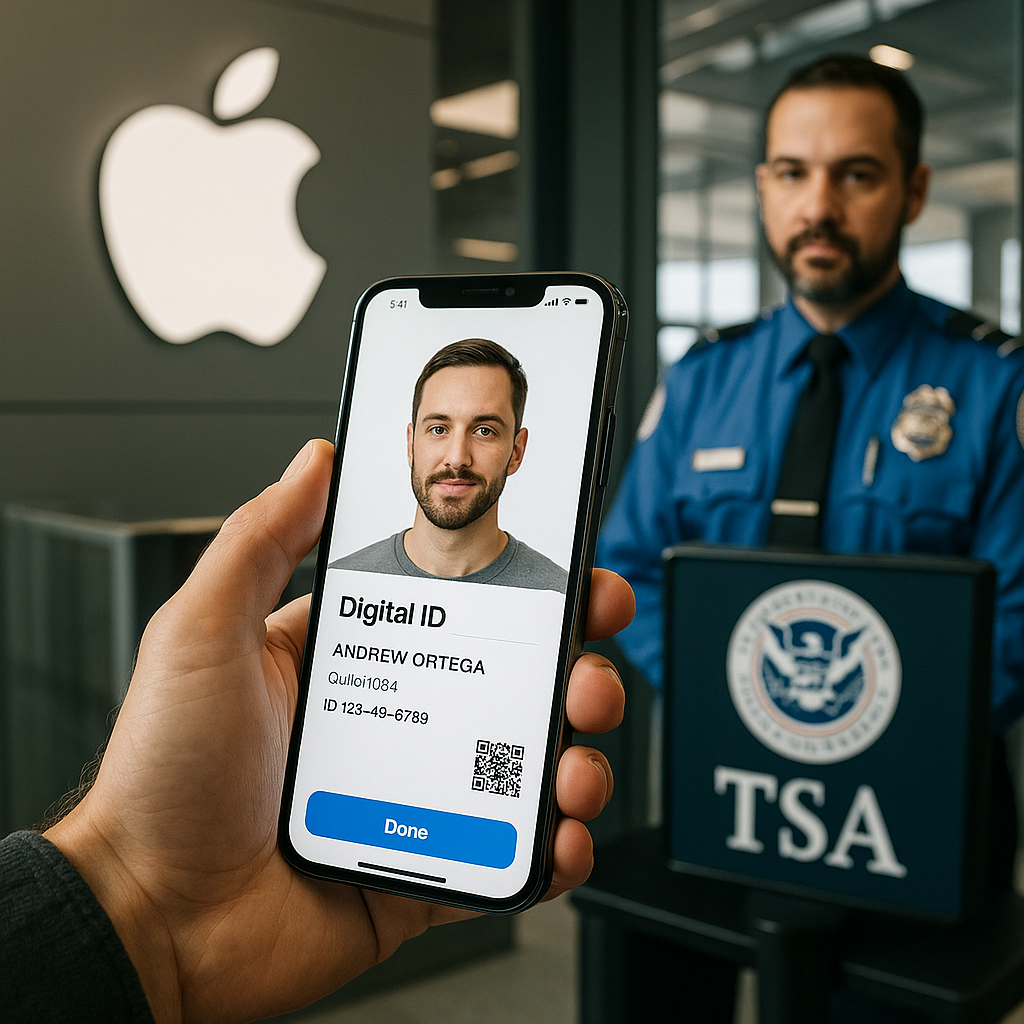
TSA began testing digital ID acceptance in select airports several years ago. As of now, more than 200 TSA lanes across the country allow passengers to verify their identity using a digital ID stored in Apple Wallet or Google Wallet.
This doesn’t mean every airport is online. And it doesn’t mean digital ID replaces standard identification. It simply means that a passenger who chooses to opt in can use their phone instead of their physical card.
But beta programs don’t stay beta forever. Once a system proves workable, it usually expands — and quickly.
When it comes to digital identity, expansion raises legitimate questions:
-
Will digital ID remain optional?
-
Will it eventually become a preferred or default method?
-
What happens when private companies influence public identification standards?
-
Who governs the data flow behind the scenes?
These are not hypothetical. They are policy questions that should be addressed now, not after digital ID becomes the standard.
Does Digital ID Replace REAL ID?
No — and this is where misinformation tends to spread. The federal government’s REAL ID requirement is tied to physical identification. Digital IDs are not a federal replacement and do not exempt individuals from REAL ID compliance.
However, states and private companies do have incentives to push digital versions. Digital ID enables:
-
Automated verification
-
Faster processing
-
Data analytics
-
Integration with services
-
Potential cross-platform identity linking
This is where privacy advocates raise concerns. Not because digital ID is “evil,” but because digitized identity creates the possibility — not the guarantee — of misuse.
The Real Concern: Centralized Identity and the Erosion of Practical Anonymity
Most Americans don’t spend much time thinking about privacy, but digital systems change the nature of privacy in ways that are invisible until it’s too late.
A physical ID sits in your wallet.
A digital ID lives within a database-dependent ecosystem.
Even if Apple stores your ID locally, verification requires communication with external systems. Metadata — time, location, method of verification — can become part of a broader picture of your activity.
This does not mean that digital IDs automatically track your movements. But it does raise the following questions:
-
What data is created every time you use digital ID?
-
Who can access that data?
-
How long is it stored?
-
Can it be combined with other data?
-
Which state or private actors have oversight?
These are not conspiracy questions. They are basic governance questions — the same ones asked in every country adopting digital identity systems.
When Convenience Becomes Complacency
Convenience is powerful. People adopted online banking, cloud storage, facial recognition, and smartphone-based payments because it made life easier. Convenience is how most technological ecosystems become normalized — not through mandates, but through user preference.
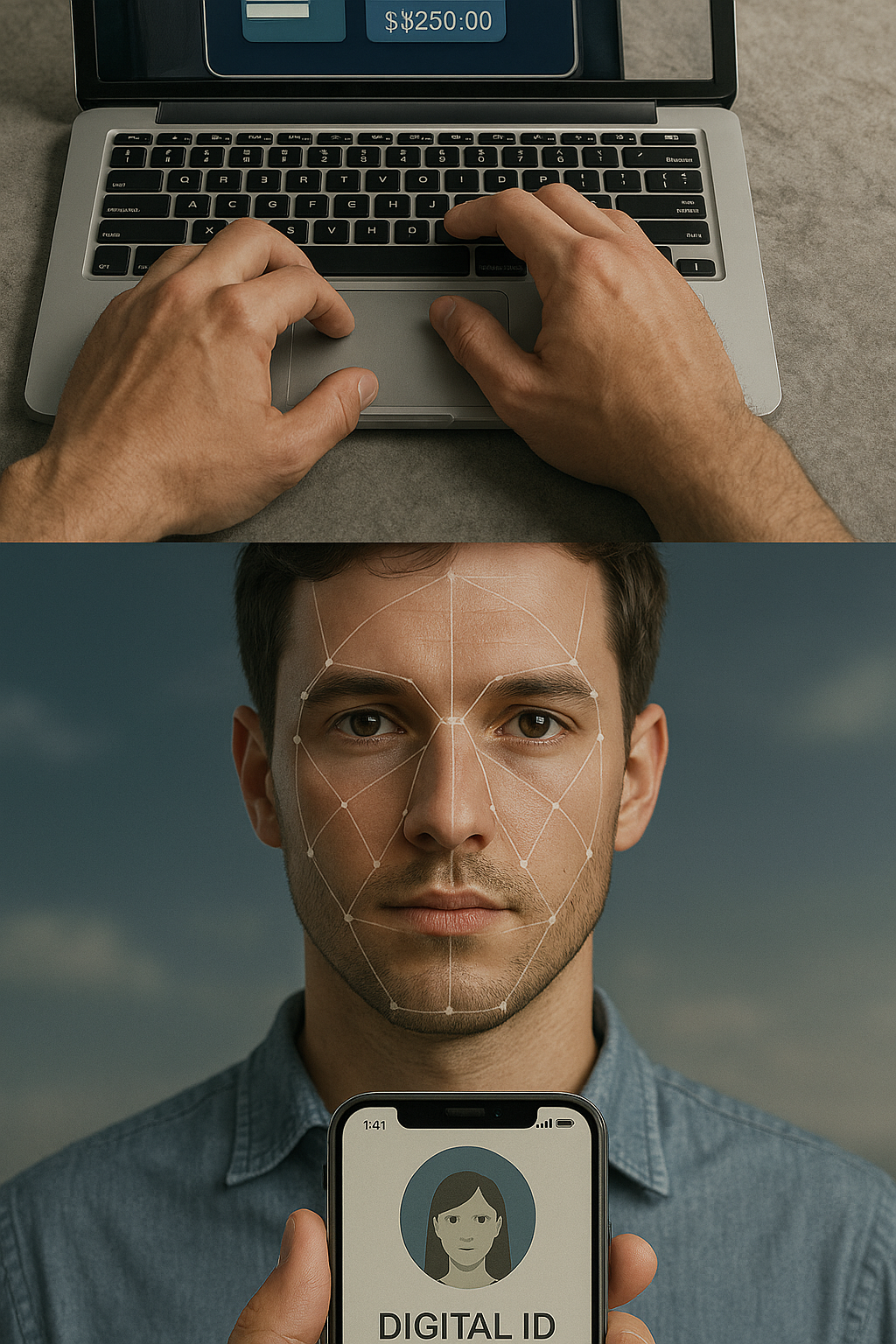
Digital ID won’t become standard overnight. Like every major technological shift before it, the transition happens quietly and gradually, almost to the point where people don’t notice it happening. It begins in the safest place: choice. At first, the system is entirely optional — a convenient add-on for those who are curious or already comfortable integrating technology deeper into their daily routines. Nothing feels threatening at this stage because nothing changes for people who choose not to participate.
Over time, however, optional systems rarely stay in their original lane. As adoption increases, institutions begin to “encourage” their use, framing digital ID as the faster, easier, or more secure alternative to traditional identification. Incentives appear. Lines move quicker for those who use it. Certain services advertise digital ID as the recommended method. And slowly, the optional begins to feel like the preferred choice.
Eventually a tipping point arrives, where digital ID becomes the default. Not because anyone forced it, but because most organizations, companies, and agencies build their processes around what the majority is using. At this stage, physical identification still exists, but it becomes less convenient. More hoops. More wait times. More situations where digital is simply assumed.
And once digital ID becomes the default, the final shift follows naturally: certain contexts begin requiring it. Not everywhere, not all at once, but piece by piece — a specific airport terminal, a state service, a secure building, an online platform. The requirement doesn’t feel sudden because the groundwork was laid years earlier. What began as a harmless option eventually becomes the foundation for participation in parts of everyday life.
This is the pattern. It’s not about fear — it’s about recognizing how systems evolve when convenience slowly turns into expectation, and expectation quietly turns into necessity.
No government official needs to “force” adoption. Most systems become standard through slow, steady integration until not using them becomes the exception rather than the rule.
This transition deserves discussion. Society should debate digital identity before implementation becomes so common that opting out becomes impractical.
Digital ID Is Not About Fear — It’s About Governance
A healthy approach to digital identification requires balance. On one side, some people place complete, unquestioning trust in technology, believing that innovation alone guarantees safety and progress. On the other side, some react with immediate fear, assuming that every new digital tool is a step toward surveillance or control. Neither extreme is useful, and neither reflects the reality of how technology shapes society.
The real middle ground — the place where responsible decisions are made — is accountability. Digital ID systems can exist without becoming intrusive, but only if they are built with strong protections and clear boundaries. That means establishing meaningful privacy standards that define exactly what information is collected, how it is used, and how long it is kept. It also means creating independent oversight so that no single agency, corporation, or government body holds unchecked authority over people’s personal data.
Accountability also includes placing strict limits on data access. Digital ID should confirm who you are, not open the door to unrelated information or hidden databases. Users must have genuine control over when and how their identity is authenticated, instead of relying on systems that make decisions behind the scenes. And perhaps most importantly, the entire process must be transparent. People deserve to know what happens every time their ID is verified — what data is logged, who sees it, and why those records are stored in the first place.
Digital ID doesn’t have to be dangerous, but it does have to be governed. Strong protections, honest oversight, and clear rules are what transform new technology from a potential risk into a tool that genuinely serves the public.
Without governance, convenience becomes control. Not because someone immediately abuses the system — but because systems without oversight always drift toward expanded use.
Where the Digital ID Debate Should Go Next
If the United States is truly moving toward a future built around digital identity, then the national conversation must shift away from the shallow debate over whether the technology itself is “good” or “bad.” The real issue isn’t the existence of digital ID — it’s the rules that govern it. The foundation of any responsible system must begin with genuine user consent. A digital ID should remain a choice, not an expectation disguised as convenience, and certainly not a requirement that quietly replaces physical identification through social or bureaucratic pressure.
Equally important is the question of data ownership. Personal identification information should belong to the citizen, not the corporation supplying the device or the third-party vendor operating the verification system. Digital ID cannot become another funnel through which private companies gain access to sensitive data simply because they manage the platform. The individual must retain full control, and that control must be legally recognized, not vaguely promised.
Digital ID systems also need strict limitations on what data is collected and how it’s used. Verifying who you are is one thing; building behavioral histories based on every scan, interaction, or checkpoint is another. Identity verification should confirm a moment — not create a trail.
Because the United States operates through a balance of state and federal power, each state must be transparent about how digital identity data is stored, protected, and accessed. People deserve to know what safeguards exist, how breaches are handled, which agencies have access, and under what circumstances information can be shared.
Finally, federal oversight must be clear, strong, and enforceable. Without explicit legal boundaries, digital identity systems could gradually drift into areas they were never intended to occupy — areas involving surveillance, monitoring, or the subtle conditioning of citizens through required digital access. The safeguards have to be established before the technology becomes widespread, not after.
In short, the debate we need is not about the existence of digital ID but about the guardrails that ensure it serves the public without encroaching on their rights. Clear legal limits should prevent any form of digital ID from becoming a gateway to surveillance or mandatory tracking systems.
Digital ID is coming — that part is no longer a question. The real question is how it will be implemented and who will control the framework behind it.
There’s nothing wrong with convenience. There’s nothing wrong with embracing technology. But every advancement requires an equal level of transparency and public discussion. Digital ID should not move forward without clear rules, public input, and strong privacy protections.
This isn’t about rejecting technology.
It’s about making sure technology respects the people who use it.
Government Technology, Digital Identity, Digital ID, Privacy Rights, Civil Liberties, Surveillance Concerns, Data Ownership, Data Security, Tech Policy, AI Governance, Public Policy, User Consent, Identity Verification, Cybersecurity, Digital Infrastructure, Emerging Technology, Personal Data Control, Federal Technology Initiatives, National Security Policy, Technology Ethics
- Hits: 237
Zapier Survey Reveals 97% of Enterprises Use AI, But Only Half See Company-Wide Benefits
 Findings highlight measurement and integration challenges slowing AI’s enterprise impact
SAN FRANCISCO —
Zapier, the most connected AI orchestration platform, today released findings from its latest Enterprise AI Benefits survey. The research shows that while nearly all U.S. enterprises (97%) are using AI within their organizations, only half report that the benefits are widespread across teams.
The survey, conducted by Centiment for Zapier, reveals a widening AI impact gap where adoption outpaces measurable value. Although 73% of companies have formal processes to track AI ROI, 91% still struggle to accurately measure results.
“AI adoption is nearly universal, but the benefits aren’t,” said Emily Mabie, AI Automation Engineer at Zapier. Our data shows that enterprises are struggling to scale AI’s value beyond isolated successes. The key to closing the gap is orchestration, connecting data, tools, and teams so AI delivers measurable outcomes everywhere.”
Key Survey Findings
- 97% of enterprises report some level of AI adoption.
- Only 50% of leaders say AI benefits are widespread across their organization, while the other 50% report uneven, limited, or non-existent benefits.
- 73% have a formal ROI tracking process, yet 91% still face challenges measuring AI’s true value.
- 25% cite time savings as their top benefit, more than three times higher than cost savings (8%).
- 91% experience challenges managing AI tools across departments, including security, integration, and training.
- HR is outpacing Marketing and Sales in AI adoption and benefits (26% vs. 23% and 13%).
The findings also highlight a perception gap between executives and other leaders. Sixty-three percent of executives believe AI benefits are widespread, compared to only 42% of directors and middle managers. Businesses that have fully embedded AI into their operations are twice as likely to see widespread benefits (76% vs. 36%).
“Enterprise AI success depends less on enthusiasm and more on execution,” Mabie added. “When organizations integrate AI across systems and measure ROI consistently, they see broader benefits, from improved customer experiences to reduced burnout and faster innovation.”
Recommendations for Scaling AI Impact
Based on the research, Zapier offers six practical steps to help enterprises close the AI impact gap:
- Connect your AI ecosystem. Ensure AI tools integrate seamlessly across teams to avoid data silos and tool sprawl.
- Measure what matters. Establish a formal ROI process. Companies that track ROI are ten times more likely to generate new revenue from AI.
- Empower every team. Use no-code or low-code tools to let business users build AI workflows safely under IT oversight.
- Standardize workflows enterprise-wide. Move from pilot projects to scalable, orchestrated automation across departments.
- Reduce tool sprawl. Consolidate redundant AI tools and ensure central governance to manage cost, security, and training.
- Reinvest time savings into innovation. With time savings as the top benefit (25%), redirect those gains to improve the customer experience and employee engagement.
About the Survey
The survey was conducted by Centiment for Zapier between September 14 and September 26, 2025. The results are based on more than 500 completed surveys of U.S. C-Suite Executives, Presidents, Owners, and Partners at companies with 1,000 or more employees. Data is unweighted, with a margin of error of ±4% at a 95% confidence level.
Full survey results see: https://zapier.com/blog/enterprise-ai-benefits/